
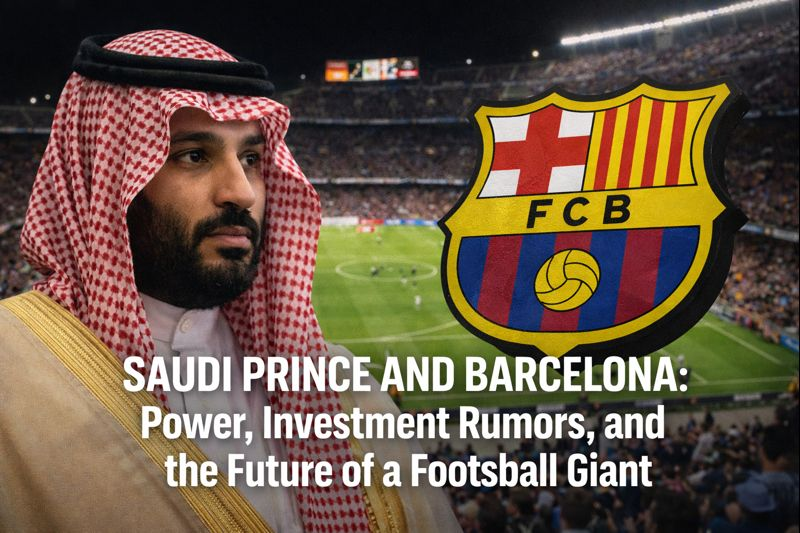
Saudi Prince and Barcelona: When Royal Wealth Meets Football Tradition
In recent years, football has increasingly become a global business shaped by powerful investors. Among the most talked-about stories is the growing speculation surrounding a Saudi prince’s interest in FC Barcelona, one of the most iconic clubs in world football. While no official agreement has been confirmed, the discussion alone reflects a broader shift in how elite football clubs are financed and managed.
Barcelona’s global appeal makes it a natural target for international investors seeking prestige, influence, and long-term value.
Why Barcelona Attracts Saudi Interest
FC Barcelona represents more than trophies. With a worldwide fanbase, historic identity, and commercial power, the club is a strategic asset. For Saudi investors, particularly members of royal circles linked to major sports initiatives, Barcelona aligns perfectly with ambitions to expand influence in global football.
Saudi Arabia has already invested heavily in sports as part of its long-term development strategy, using football to enhance global visibility and soft power. A connection with Barcelona would symbolize access to European football’s elite ecosystem.
Financial Context: Opportunity or Controversy?
Barcelona’s well-documented financial challenges have fueled speculation about external backing. Rising debts, wage restructuring, and stadium redevelopment costs have forced the club to explore creative financial solutions.
Supporters remain divided. Some see foreign investment as a lifeline that could stabilize finances, strengthen squad depth, and accelerate long-term projects. Others fear that outside influence — particularly from royal investors — could threaten Barcelona’s historic identity and member-owned structure.
This tension between tradition and modern football economics sits at the heart of the debate.
What Could a Saudi Connection Mean for Barcelona?
If any form of partnership were to materialize, the impact could be significant. Increased financial resources could enhance transfer flexibility, infrastructure development, and global marketing reach.
However, such involvement would also raise questions around governance, cultural values, and competitive balance. European football regulators, fans, and media would closely scrutinize any deal involving sovereign-linked wealth.
A Symbol of Football’s Changing Landscape
Whether rumors become reality or not, the discussion surrounding a Saudi prince and Barcelona highlights football’s transformation. Clubs are no longer just sporting institutions — they are global brands operating within geopolitical and economic frameworks.
Barcelona now stands at a crossroads, balancing its heritage with the realities of modern football finance.
Final Thoughts
The possibility of Saudi interest in FC Barcelona reflects a new era where tradition meets global investment. While uncertainty remains, one thing is clear: the future of elite football will increasingly be shaped by decisions made far beyond the pitch — and Barcelona remains firmly at the center of that conversation.
Leave a Reply