
Introduction
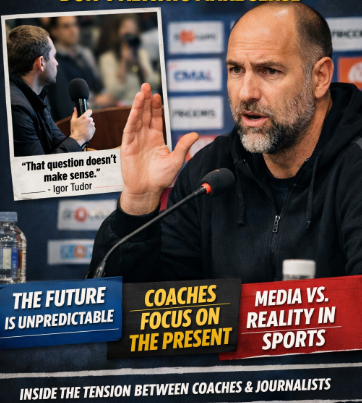
In the fast-paced world of professional sports, press conferences are often filled with speculative questions about the future. However, not every coach or manager appreciates being asked to predict what lies ahead. Recently, Tudor made headlines after responding sharply to a journalist who asked about his team’s future plans. According to Tudor, the question simply “did not make sense.”
His reaction sparked discussion about the relationship between sports journalists and coaches, and whether questions about the future are sometimes unrealistic.
The Question That Sparked the Reaction
During the press conference, a journalist attempted to ask Tudor about long-term expectations and future outcomes. While such questions are common in sports media, Tudor immediately challenged the premise.
He argued that predicting the future in football is often impossible because too many variables are involved—player performance, injuries, tactics, and unexpected results. For Tudor, discussing something that cannot be realistically predicted was not a productive topic.
His response was direct and firm, making it clear that he prefers to focus on the present rather than hypothetical scenarios.
Why Coaches Often Avoid Future Predictions
Tudor’s reaction reflects a broader mindset shared by many coaches. In competitive sports, professionals tend to concentrate on immediate goals rather than distant projections.
There are several reasons for this approach:
1. Uncertainty in Sports
Football is unpredictable. One match can completely change a team’s trajectory.
2. Pressure and Expectations
Public predictions can create unnecessary pressure for players and coaching staff.
3. Focus on Performance
Many coaches believe success comes from concentrating on the next game rather than worrying about long-term speculation.
The Role of Journalists in Press Conferences
While Tudor’s reaction was strong, journalists also have a responsibility to ask questions that interest fans. Supporters often want to know what direction a team might take or how a coach views the future.
From the media’s perspective, questions about upcoming seasons, transfers, or long-term strategies can generate engaging stories. However, this situation shows how easily a gap can appear between what journalists want to know and what coaches feel comfortable discussing.
A Reminder About Communication in Sports Media
The exchange between Tudor and the journalist highlights an ongoing tension in sports communication. Coaches aim to protect their team’s focus, while reporters seek insights that captivate audiences.
Ultimately, moments like this remind us that press conferences are not only about answers—they are also about perspectives. For Tudor, the future cannot be predicted in a single question, and any attempt to do so may simply miss the reality of the game.
Conclusion
Tudor’s remark that the journalist’s question “did not make sense” may have sounded blunt, but it reflects a common philosophy in professional football: focus on today, prepare for tomorrow, and let the results speak for themselves.
Leave a Reply